Validate Before You Build: A Mixed-Methods Playbook

In today’s world, every click, feature, and campaign costs time, money, and attention. Guessing isn’t a strategy anymore.
The companies that win don’t just move fast — they learn fast. And so can you. When you validate before you build, you turn risk into learning. You replace hunches with hard evidence, and opinions with insight.
With Bitrix24, that process becomes simple. Tools like Landing Pages, Analytics & Reporting, and CoPilot in Sites & Stores let you test, measure, and learn in one place — without slowing down.
Looking for a playbook to grow smarter, reduce risk, and build things people actually want? You’re in the right place.
The core principle: Evidence before execution
Every great product or campaign starts with an idea.
But even the best ideas fail when they’re based on assumptions instead of evidence. The smartest teams don’t rush to build, they validate first.
Validation starts with a simple question: Does this solve a real problem for real people?
Testing your assumptions early prevents wasted effort, weak launches, and expensive rework. It helps you learn what matters, move faster in the right direction, and align every decision with customer needs.
Today, intuition alone isn’t enough.
Bitrix24 brings both together. Use Analytics & Reporting to track behavior — traffic, engagement, conversions — and Web Forms or CRM records to capture intent and reactions in real time.
Then turn that data into insight by centralizing customer feedback, chat conversations, and notes inside Bitrix24. You’ll see the full picture: the numbers that show what’s happening and the stories that explain why.
Ready to reduce risk and grow smarter?
Bitrix24’s integrated tools help you capture behavior, collect feedback, and turn data into clear insights.
Try Bitrix24 Free TodayThe mixed-methods framework (Quant + Qual)
When you validate before you build, your goal isn’t just to collect data, it’s to understand truth from multiple angles.
That’s where mixed-methods validation comes in.
It combines quantitative and qualitative approaches to give you both clarity and context. You’ll know what’s happening and why it’s happening, a powerful combination that drives smarter growth decisions.
Quantitative validation
Quantitative validation focuses on measurable evidence. These are the numbers that show you whether your idea, product, or campaign is gaining traction.
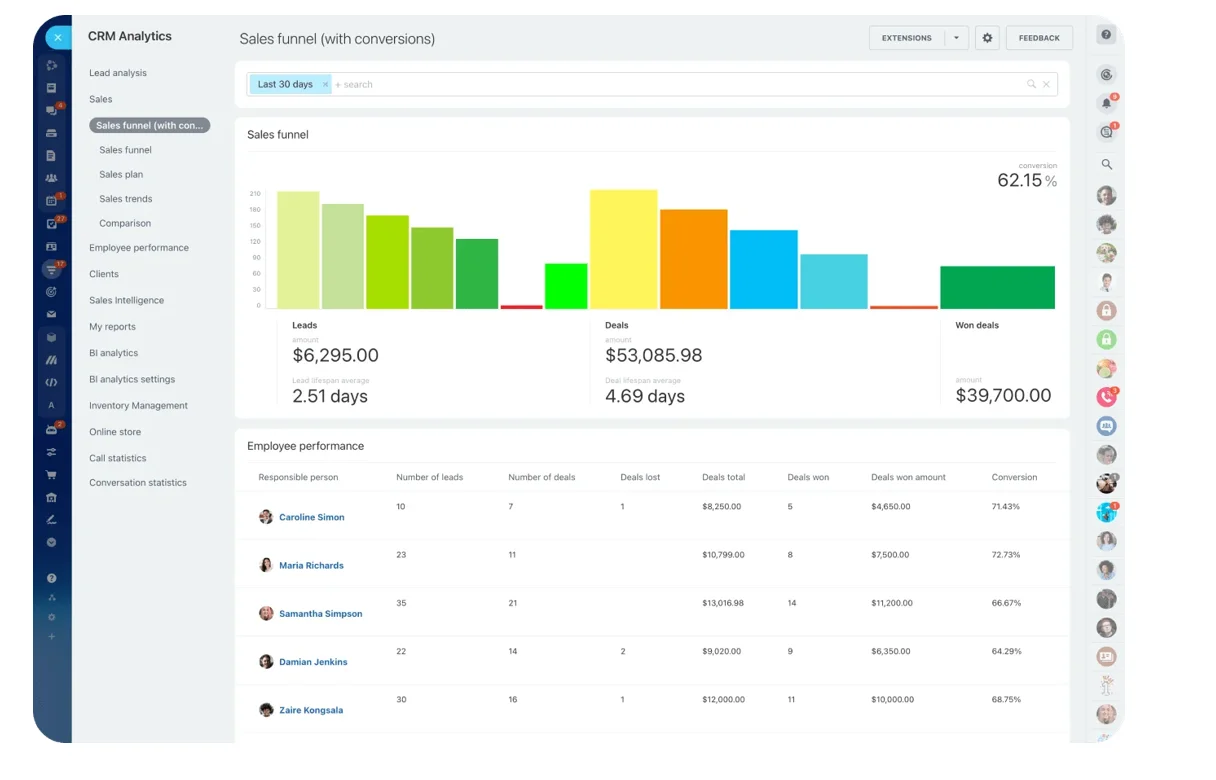
Here are a few quantitative validation methods:
- A/B testing: Compare two versions of a landing page or message to see which performs better.
- Surveys and polls: Collect structured data on preferences, needs, and behavior.
- Traffic and conversion analytics: Track user actions (clicks, sign-ups, purchases) to measure interest.
- Engagement metrics: Analyze bounce rates, time on page, and interactions to assess appeal.
With Bitrix24’s Analytics & Reporting, you can visualize all these insights in one place. Instead of juggling multiple dashboards, you get clear, unified data on performance. You’ll quickly see which ideas resonate and which need refinement, saving you time and guesswork.
Qualitative validation
Numbers tell you what’s happening, but stories tell you why. Qualitative validation dives into the motivations, pain points, and emotional drivers behind your audience’s actions.
You can use methods like:
- User interviews and focus groups: Listen directly to your customers’ experiences.
- Prototype or concept testing: Gather feedback on early versions before investing in full development.
- Open-ended survey responses: Capture insights that metrics alone can’t reveal.
- Customer support logs and chat transcripts: Identify recurring patterns in real conversations.
These insights help you understand intent: the human context that quantitative data often misses. They ensure that every number you measure is anchored in genuine customer experience.
Why mixing methods is so powerful
When you merge quantitative clarity with qualitative depth, you move from surface-level validation to real understanding.
Numbers show the trend. Conversations explain the reason. Together, they guide smarter decisions.
Imagine launching a Bitrix24 landing page to test interest in a new product feature. Analytics might show high traffic but low sign-ups — a classic “what without the why.” But a few user interviews reveal the missing piece: people were interested, they just didn’t understand the offer. That insight helps you refine messaging and improve conversions before a full rollout.
The real power of mixed methods isn’t in collecting data — it’s in using it.
With Bitrix24, you can pair Analytics & Reporting with feedback captured through surveys, messages, or meetings to:
- Spot early demand signals
- Identify weak points in your idea or communication
- Adjust strategies with confidence and precision
When you blend measurement with meaning, validation stops being a checkbox — it becomes a system for smarter, faster, more confident execution.
Ready to see what this looks like in practice? Here’s a simple framework you can follow.
Pre Build Validation Playbook: Mixed Methods Tests Offer Sheets And Decision Gates
Enter your email address to get a comprehensive, step-by-step guide

Step-by-step playbook to validate before you build
Now that you understand the power of mixed-methods validation, let’s put it into action.
This playbook will walk you through each stage of validating an idea before you commit to building it.
Step 1: Build a lightweight validation asset
You don’t need a full product to test an idea, just a minimum viable test.
Here are a few simple ways to bring your idea to life:
- Create a landing page using Bitrix24 Sites to gauge interest.
- Run a social or email campaign promoting your concept.
- Share a prototype or demo video with selected users.
Bitrix24 makes this easy with CoPilot in Sites & Stores, which can help you generate on-brand content, headlines, and calls to action in seconds. You can launch your test in hours instead of weeks.
Step 2: Gather both behavioral and attitudinal data
Once your test is live, start collecting data from both angles:
Quantitative data (behavioral):
- Page views, clicks, and conversion rates.
- Time on page and bounce rate.
- Sign-up or purchase intent.
Qualitative data (attitudinal):
- Customer feedback via forms or chat widgets.
- Comments from early users or community members.
- Notes from short interviews or follow-up surveys.
Using Bitrix24 Analytics & Reporting, you can track quantitative results automatically while capturing qualitative feedback in your CRM. Everything stays organized, visible, and actionable.
Step 3: Analyze, interpret, and learn
Now it’s time to look for patterns.
Ask:
- What does the data show?
- What did people say, and does it align with the numbers?
- Are there surprises or contradictions?
For example, you may find strong engagement but low conversions. That could signal interest in the concept, but confusion in your offer. This is where qualitative insight becomes invaluable.
In Bitrix24, you can use custom dashboards to visualize both hard data and soft feedback. The combination helps you see where adjustments are needed, before scaling further.
Step 4: Decide: pivot, refine, or proceed
Validation gives you clarity to act. Once you’ve gathered enough evidence, decide how to move forward:
- Proceed: Yay, your idea resonates! Double down and start building…
- Refine: The concept shows promise, but some aspects need adjustment.
- Pivot: The data or feedback shows misalignment, it’s time to rethink direction.
Whatever you decide, document your findings. That learning becomes a foundation for future growth experiments.
Real-world scenarios
Below are a few examples showing how teams can use Bitrix24 to validate before they build:
Scenario 1: A marketing team validating campaign messaging
The challenge:
A B2B marketing team is preparing a large campaign but isn’t sure which message will convert best.
The validation approach:
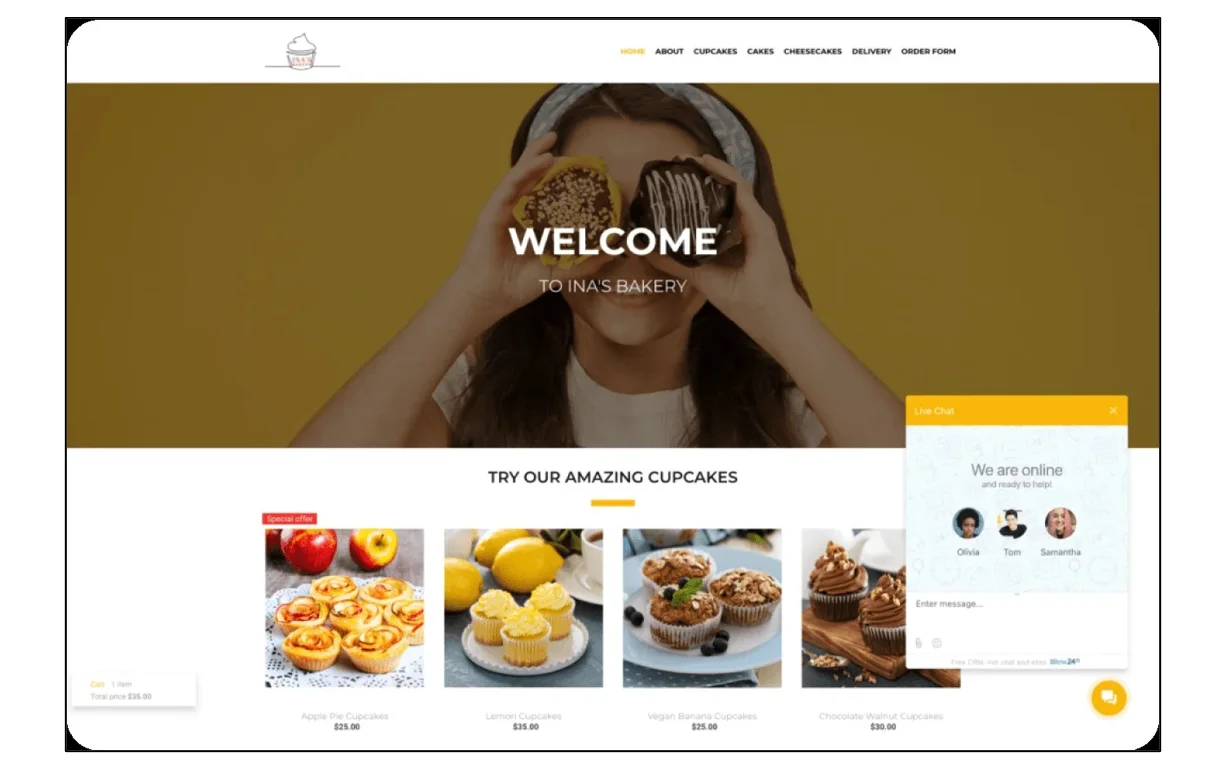
- They build three Bitrix24 landing pages, each testing a different headline and offer.
- They run small paid ads driving traffic to each version for one week.
- With Analytics & Reporting, they compare bounce rates, conversions, and engagement metrics.
- Through follow-up feedback forms, they collect open-ended comments about clarity and tone.
The result:
Quantitative data shows one version outperforming the others, while qualitative feedback reveals why: the winning version uses plain language and emphasizes real outcomes.
The team uses this insight to shape the final campaign, cutting guesswork and improving ROI before launch.
Scenario 2: A product team validating a new feature
The challenge:
A SaaS company plans to introduce a collaboration feature but needs to know if users actually want it.
The validation approach:
- They design a mock feature walkthrough video and share it through their Bitrix24-powered community portal.
- They track engagement metrics (video views, clicks on interest buttons, and sign-up intent) with Analytics & Reporting.
- Then they conduct quick interviews with high-engagement users to understand perceived value and usability concerns.
The result:
While engagement is strong, interviews reveal confusion about how the feature fits existing workflows.
The team refines the concept before coding begins, saving weeks of rework.
Learning is growth
In all these examples, teams used mixed methods to validate assumptions before building anything substantial. They combined the clarity of numbers with the insight of human feedback, and Bitrix24 served as their central hub for both.
When validation becomes a standard part of your workflow, you don’t just reduce risk, you create a repeatable system for growth. You learn faster, waste less, and make decisions rooted in real evidence.
How to integrate mixed-methods validation into your growth process
Validation works best when it becomes a habit, a part of how your team thinks, plans, and builds every day.
1. Make validation a standard step in every project
Every new idea, feature, or campaign should start with a validation phase.
Before you assign developers or launch a campaign, ask:
- Have we tested this concept with our audience?
- What data do we have to support this direction?
By making validation a standard checkpoint, you reduce risk and align your team around real evidence, not assumptions.
2. Centralize data and feedback for easier collaboration
Mixed-methods validation involves both numbers and narratives. Keeping those insights in separate tools can slow you down.
Bitrix24 unifies everything in one workspace.
- Quantitative data flows in from your landing pages, campaigns, and stores.
- Qualitative feedback is captured in your CRM from chat widgets, forms, and follow-ups.
- All findings are accessible to everyone, from product managers to marketers, without switching platforms.
When teams see the full picture in one place, collaboration becomes effortless. Decisions get faster, and learning gets shared.
3. Close the loop: from insight to action
Data is only valuable when it drives action.
After each validation cycle, hold a quick review:
- What worked?
- What didn’t?
- What will we test next?
You can record these learnings directly in Bitrix24 using task comments or knowledge bases. Over time, this builds an internal library of validated insights.
4. Keep the feedback loop continuous
Even successful ideas benefit from ongoing feedback.
With Bitrix24 CoPilot in Sites & Stores, you can automate parts of this loop:
- Set CoPilot to analyze incoming customer feedback.
- Use its recommendations to adjust headlines or offers on the fly.
- Track the performance impact automatically through analytics.
This keeps your validation process active and evolving, without adding workload.
Common pitfalls and how to avoid them
Even solid validation strategies can go off track. Here are seven common mistakes and how to avoid them using Bitrix24:
|
Pitfall |
What Happens |
How to Avoid It with Bitrix24 |
|---|---|---|
|
Over-relying on one type of data |
You miss context by focusing only on numbers or opinions. |
Combine Analytics & Reporting with CRM feedback forms for balanced insights. |
|
Confirmation bias |
You only notice data that supports your assumptions. |
Set success criteria in Bitrix24 Tasks and review results objectively. |
|
Vanity metrics |
High clicks or views mask weak engagement. |
Track real KPIs—sign-ups, conversions, and retention—via custom dashboards. |
|
Skipping documentation |
Valuable insights get lost over time. |
Save results and notes in the Bitrix24 Knowledge Base for future use. |
|
Testing too big, too soon |
You overinvest before confirming demand. |
Launch small landing page tests with CoPilot in Sites & Stores. |
|
Ignoring the “why” behind data |
You see behavior but not motivation. |
Add quick feedback forms or follow-ups to capture user sentiment. |
|
Failing to revisit and revalidate |
Assumptions go stale as markets shift. |
Schedule recurring validation tasks and reminders in Bitrix24. |
Most validation mistakes stem from rushing, assuming, or overlooking small but critical signals. The good news? Each one is avoidable with the right system.
Build smarter, not harder
When you validate before you build, growth becomes intentional, not accidental.
Bitrix24 gives you the structure to make that happen. From launching quick landing page tests to tracking insights and automating follow-ups with CoPilot in Sites & Stores, you can turn evidence into action, all in one place.
If you’re ready to stop guessing and start growing smarter, start validating your next idea with Bitrix24 today.
Explore Bitrix24 to see how easy it is to test, measure, and build with confidence.
FAQ’s
1. How do I know when I’ve validated enough?
When the evidence is consistent. If new tests produce the same outcomes and customer feedback echoes the same themes, you’ve learned enough to act.
In Bitrix24, you can see this convergence in your dashboards — when analytics stabilize and CRM feedback stops surfacing new objections, it’s time to build.
2. What if data and feedback tell different stories?
Treat it as a signal, not a conflict. Data shows behavior; feedback reveals motivation. If metrics are strong but feedback is hesitant (or vice versa), you’ve found a gap to explore.
Bitrix24 helps connect those dots — you can view analytics alongside CRM notes or chat logs to uncover what’s driving the disconnect.
3. How can validation become part of our routine?
Embed it in every project. Create a simple “validate → review → build” step in your workflow.
In Bitrix24, template this as a recurring task with linked dashboards and feedback forms so every new idea automatically passes through a quick test phase.