Beyond the Revenue Number: 5 Sales KPIs That actually Predict Growth


TL;DR: Revenue is a lagging indicator—it shows problems after they've done damage. Track these 5 leading KPIs instead: conversion rate by lead source, stage-to-stage conversion, sales cycle length, activity-to-opportunity ratio, and pipeline coverage. They shift before revenue does, giving you time to fix issues mid-quarter.
Two weeks into the quarter, your pipeline looks fine. Reps are busy. Forecast feels steady. Then revenue slips and you’re left explaining what changed. The warning signs were there; you just weren’t tracking them.
Leading sales KPIs move before revenue moves, giving you time to course-correct while the quarter is still salvageable. Unlike lagging indicators (revenue, bookings, closed-won totals), leading KPIs reflect sales execution and process quality in real time.
If you want predictable growth, you need to manage sales like an operating system, not a scoreboard.
In this article, you’ll get five leading KPIs to review weekly, the signals to watch, and the first corrective move for each — so your forecast becomes something you manage, not something you hope is right.
The 5 Sales KPIs That Predict Growth
|
KPI |
What It Measures |
Why It's Predictive |
|---|---|---|
|
Conversion rate by lead source |
Which channels produce deals that close |
Shows source quality before pipeline inflates |
|
Stage-to-stage conversion |
Where deals drop off in your funnel |
Reveals process breakdowns before revenue dips |
|
Average sales cycle length |
Time from first touch to closed-won |
Slowing cycles signal forecast risk |
|
Activity-to-opportunity ratio |
Effort required to create and close deals |
Activity changes before pipeline changes |
|
Pipeline coverage ratio |
Pipeline value ÷ revenue target |
Shows whether you can hit target with current pipeline |
KPI #1: Conversion Rate by Lead Source
More leads don't automatically create growth. If your pipeline is filled with low-fit prospects, your team stays busy, but results stay volatile.
What to track:
-
Lead → deal conversion rate by source
-
Deal → closed-won rate by source
-
Average deal size by source
Why it predicts growth: This KPI shows which channels bring prospects who actually convert—and which create "pipeline noise." If a source's conversion drops, it signals targeting issues or qualification gaps before revenue reflects it.
What to do when it moves:
-
If one source converts 2–3x higher: double down and replicate what's working
-
If volume is high but conversion is weak: tighten qualification before spending more
-
If win rate is strong but lead → deal is weak: check follow-up discipline
Track lead sources in your CRM with standardized values captured automatically through forms and website widgets, not manual rep entry.
Predictive Sales Dashboard Templates: Leading Indicator Tracker
Enter your email address to get a comprehensive, step-by-step guide

KPI #2: Stage-to-Stage Conversion Rate
Win rate alone can't tell you where deals are lost. Stage-to-stage conversion shows exactly where your funnel leaks.
What to track:
-
Conversion % between each pipeline stage
-
Drop-off rate per stage
-
Average time in stage (the early warning layer)
Why it predicts growth: Stage movement slows before revenue drops. When conversion declines at one stage, it points to specific root causes: weak qualification, unclear next steps, pricing friction, or inconsistent follow-up.
Key pattern: A stage with both high drop-off and long time-in-stage is usually your biggest growth constraint.
Setup tip: Stage conversion only works if stages mean the same thing to everyone. Keep stages simple, define entry/exit criteria, and avoid vague stages like "in progress." Use sales pipeline management tools that enforce consistent stage usage.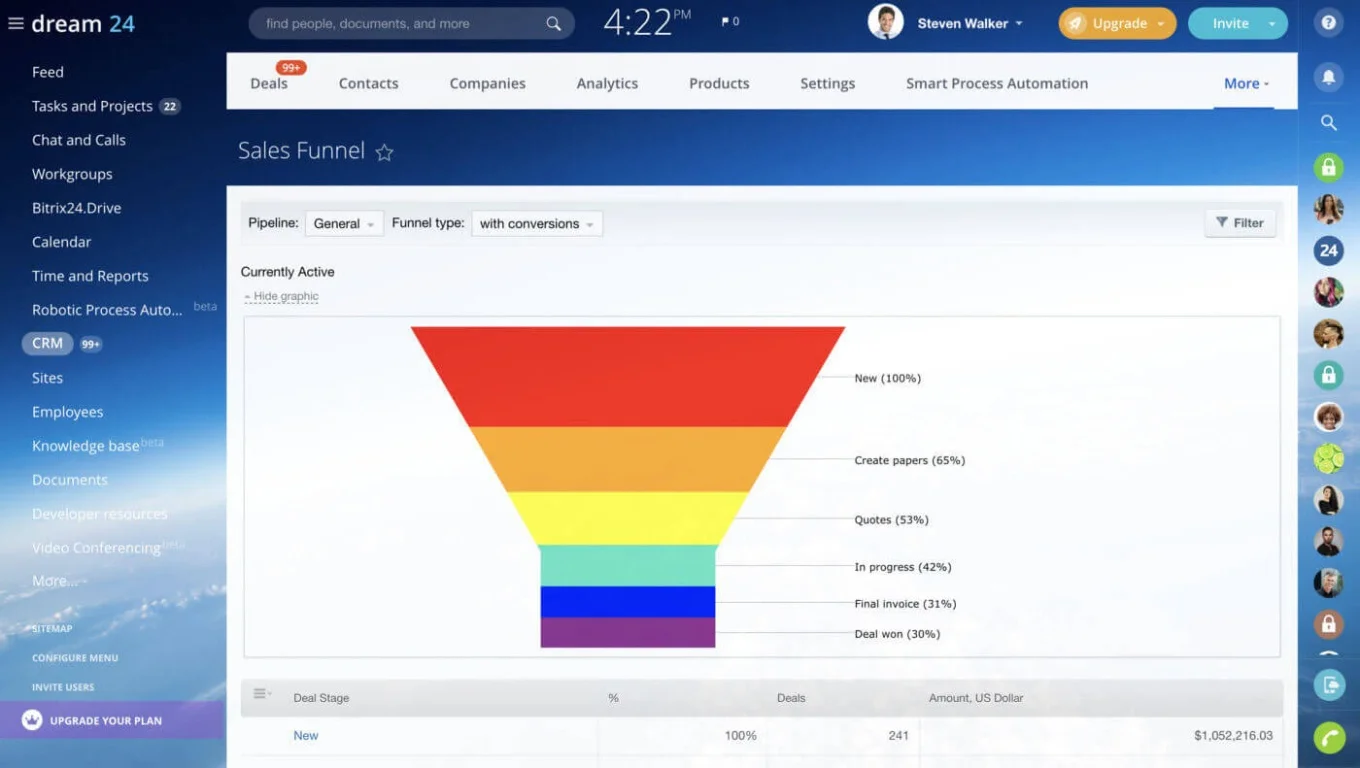
KPI #3: Average Sales Cycle Length
Revenue growth isn't only about closing more deals; it's about closing deals faster. Longer cycles make forecasting unreliable and create end-of-quarter pressure.
What to track:
-
Average cycle trend (month over month)
-
Cycle length by lead source
-
Cycle length by deal size or segment
-
Time spent per stage
Why it predicts growth: Cycle time directly impacts how quickly the pipeline turns into cash and how many deals each rep can close per month. When cycle length increases, it often signals weak qualification, low prospect urgency, or deals sitting without clear next steps.
Quick benchmark: If average cycle length increases by 10–15% over a short period, treat it as an early warning. Forecast misses often follow.

KPI #4: Activity-to-Opportunity Ratio
Results improve when your team consistently does work that creates a pipeline and moves deals forward. This KPI shows whether effort translates into outcomes.
What to track:
-
Activities per deal created
-
Activities per deal won
-
Follow-up gaps (deals with no activity in X days)
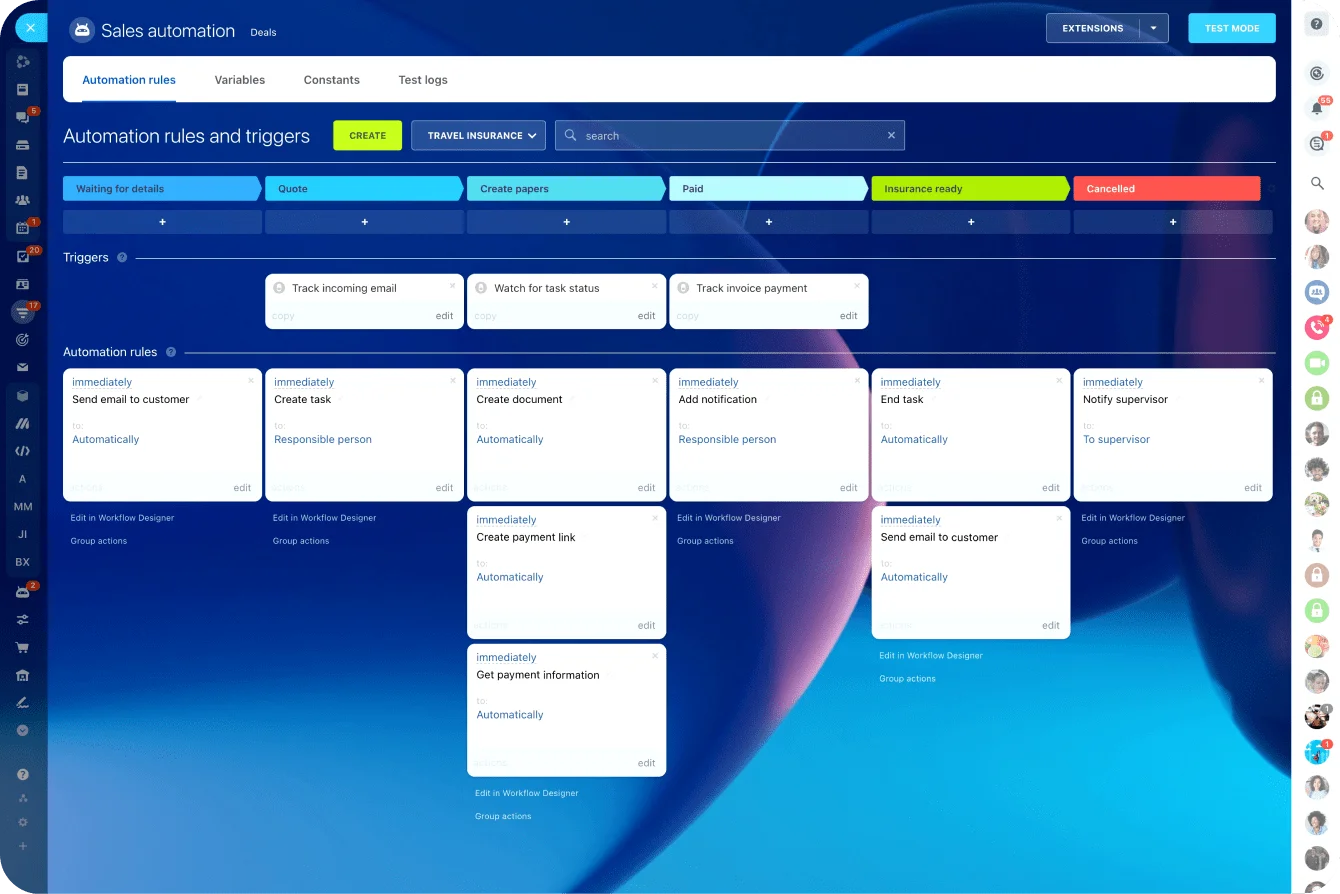
Why it predicts growth: Activity changes first. When meaningful activity drops, pipeline creation drops soon after. Revenue follows later. It also reveals reps staying "busy" without moving deals, or effort going to low-fit accounts.
What to do when it moves:
-
Activity flat but opportunities drop → quality or targeting is off
-
Activity rises but wins don't → wrong activities or too much time on poor-fit deals
-
Follow-up gaps increase → tighten next-step rules
KPI #5: Pipeline Coverage Ratio
You can't hit a revenue target without enough qualified pipeline. This KPI tells you early whether you're on track (or already behind).
What it is:
Pipeline coverage ratio = total pipeline value ÷ revenue target
Example: $300K pipeline ÷ $100K target = 3x coverage
What to track:
-
Coverage ratio for current month/quarter
-
Coverage by rep or team
-
Weighted pipeline vs. raw pipeline
Why it predicts growth: If coverage is too low, you'll miss the target unless you generate pipeline immediately. If coverage looks high but results are weak, your pipeline may be inflated with poorly qualified deals or unrealistic close dates.
Quick benchmark: Most teams aim for 3x–5x coverage, depending on win rate and cycle length.
Coverage only works with clean data. Use analytics and reporting tools that flag stale deals and overdue close dates automatically.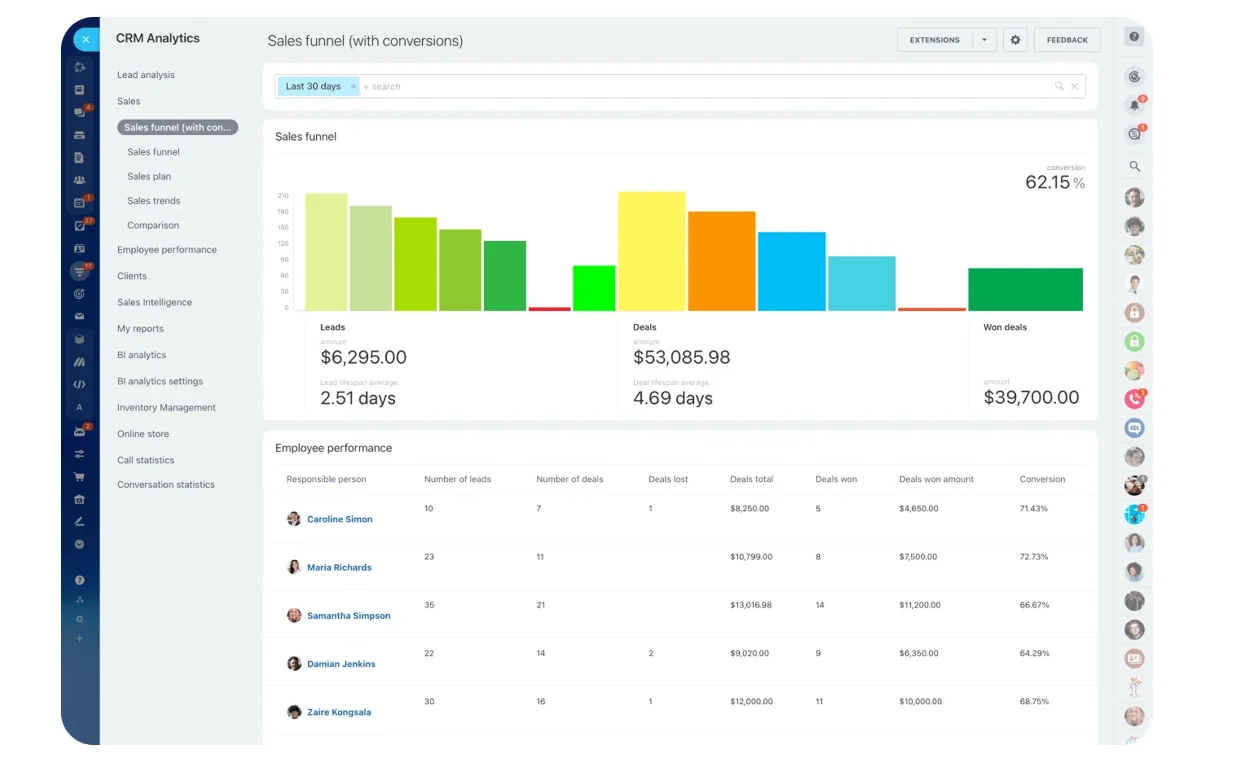
Build Your Predictive Sales Dashboard
A predictive dashboard should answer five questions every week:
|
Question |
KPI Panel |
|---|---|
|
Where is growth coming from? |
Lead source conversion rates |
|
Where are deals leaking? |
Stage-to-stage conversion |
|
Is revenue speeding up or slowing down? |
Sales cycle trend + time in stage |
|
Is the team executing consistently? |
Activities per rep + follow-up gaps |
|
Are we covered to hit the target? |
Pipeline coverage ratio |
Weekly review cadence:
-
Monday: Coverage and close-date reality check
-
Midweek: Bottleneck review (where are deals stalling?)
-
Friday: Execution review (are reps creating momentum?)
When these KPIs live in one CRM system, you spend less time reporting and more time improving the actions that drive growth.
KPI shifts: what to do when the numbers change
Leading KPIs only matter if they trigger action. The goal isn’t reporting; it’s response. When one of these indicators moves, treat it like an early signal, not a quarterly postmortem.
-
If lead source conversion drops, tighten qualification and audit messaging before adding more spend.
-
If stage conversion weakens in one step, focus coaching and deal review on that stage only, not the entire funnel.
-
If sales cycle length expands, prioritize deals with clear next steps and remove stalled opportunities from the forecast.
Activity ratios are most useful when paired with outcomes. If reps are active but the pipeline isn’t moving, the issue is deal quality or misallocated effort. And if pipeline coverage falls below your benchmark, shift immediately into pipeline generation mode — waiting two weeks usually makes the gap unrecoverable.
Predictive KPIs work best when every metric has an agreed “first move” attached.
Common KPI Mistakes That Kill Forecast Accuracy
|
Mistake |
Problem |
Fix |
|---|---|---|
|
Messy pipeline stages |
Stage conversion becomes meaningless |
Define clear criteria; standardize usage |
|
Inconsistent lead sources |
Attribution breaks; wrong channel investments |
Standardize options; capture automatically |
|
Tracking activity without outcomes |
Drives busywork, not results |
Track ratios (activities per deal won) |
|
Stale close dates |
Pipeline coverage becomes fiction |
Flag idle deals; require next steps |
When Leading KPIs Don't Help
Leading indicators work best when your sales process is repeatable. They're less useful when:
You're in an early-stage product-market fit. If your ICP, pricing, or sales motion is still shifting weekly, KPI benchmarks won't be stable enough to act on.
Deal volume is too low. With fewer than 20–30 deals per quarter, conversion percentages swing wildly. Focus on qualitative deal reviews instead.
Your CRM data is unreliable. If stages aren't used consistently or activities aren't logged, dashboards create false confidence. Fix data hygiene first.
You're tracking too many metrics. More KPIs don't mean better decisions. Start with these five; add others only when you've mastered these.
Measure What Drives Revenue
Revenue tells you the result. It doesn't tell you what to fix.
Track these five leading KPIs to spot risk earlier, coach with precision, and forecast with confidence:
-
Conversion rate by lead source
-
Stage-to-stage conversion rate
-
Average sales cycle length
-
Activity-to-opportunity ratio
-
Pipeline coverage ratio
When you measure what drives revenue — not just the revenue number itself — you can fix problems mid-quarter instead of explaining misses afterward.
Bitrix24 lets you monitor all five in one place: lead sources, pipeline movement, rep activity, and coverage. And all without jumping between tools. Start for free today.
Predict Your Sales Growth
With Bitrix24 sales dashboard, identify leading sales KPIs for growth before revenue slips. Harness the advantage of predicting and improving growth indicators for better outcomes.
Get Started NowSales KPIs FAQ
What is the difference between lagging and leading indicators?
Lagging indicators confirm results after the fact—revenue, bookings, closed-won deals. Leading indicators move earlier because they reflect process quality in real time: conversion rates, deal velocity, activity consistency, and pipeline coverage. Leading KPIs give you time to fix problems; lagging KPIs only tell you there was a problem.
How do I forecast revenue for the next quarter accurately?
Combine pipeline coverage ratio with weighted pipeline (adjusting deal values by stage probability). Cross-check against historical conversion rates and average cycle length. If coverage is below 3x or cycle length is increasing, adjust your forecast downward. Review close dates weekly to ensure they're realistic.
Can I customize reports for different stakeholders?
Yes. Executives typically need coverage and revenue trend views. Sales managers need stage conversion and rep activity dashboards. Reps need their own pipeline and follow-up gap alerts. Build role-specific dashboards using CRM analytics so each stakeholder sees what helps them act.
What should I do if my pipeline coverage looks healthy but I still miss the target?
High coverage does not guarantee accuracy if pipeline quality is weak. Stale close dates, overestimated deal values, or late-stage deals without clear next steps can inflate coverage. Review weighted pipeline against historical stage conversion rates and audit any deal that has not moved stages within its normal cycle window.
Which activities should count in the activity-to-opportunity ratio?
Only include activities that meaningfully advance deals, such as discovery calls, demos, proposal discussions, and scheduled follow-ups tied to a next step. Counting low-impact actions like generic emails can distort the ratio and reward busywork rather than progress.
How do I track leading KPIs if my CRM data isn’t reliable?
You must first standardize stage definitions, lead source fields, close-date rules, and activity logging expectations. Without consistent data entry, leading indicators become misleading. Fix data hygiene before relying on KPI trends for forecasting decisions.
How should I adjust these KPIs for different deal sizes or segments?
Segment your metrics by deal size or market segment rather than using one company-wide benchmark. Enterprise deals typically require longer cycles and higher coverage ratios than SMB deals. Compare performance against each segment’s historical averages to maintain accurate forecasts.