From Promise to Delivery: Build a Handoff That Protects Scope and Trust


TL;DR (Quick Summary)
- Deals close before delivery has accepted the risk that comes with them, so scope and trust unravel at kickoff.
- Fix it with a real sales-to-delivery handoff: a formal transfer of documented scope, approvals, ownership, dependencies, and open risks.
- Get the promise accepted before execution starts, or the client sees the confusion first.
Takeaway: Get the promise accepted before execution starts, or the client sees the confusion first.
The deal closes Friday. Monday, the project owner opens the account and finds three surprises: the celebrated timeline assumes client data nobody's requested yet, a reporting integration the client keeps referencing was never scoped, and a "we should be able to do that" from a sales call is now, apparently, a firm commitment.
None of it got written down anywhere delivery can see.
By the first client call, the project owner is asking questions the client already answered weeks ago, back when they were building trust with the salesperson. Now the client watches a delivery team that seems to know less about the deal than they do.
That's where scope and trust start to slip, and no kickoff meeting wins them back.
A better kickoff won't save this. The fix is a real handoff before kickoff: sales' promises turned into a brief delivery has formally accepted, with the open risks named, before work starts. Get that acceptance and the promise reaches delivery intact, so the client never sees the seams.
Run it inside a system like Bitrix24 CRM and the transition stays visible from closed-won to delivery acceptance, instead of scattered across inboxes, proposals, and memory.
From promise to delivery: Why sales-to-delivery handoffs fail at the exact moment trust matters most
The core problem is timing. Sales closes the deal before delivery risk has changed hands. That leaves a gap between what the client heard, what the company approved, and what the delivery team can execute.
A project owner inherits the account after signature and finds out the promised timeline depends on client data nobody prepared, a requested integration was never reviewed, or a deliverable everyone discussed on a call never made it into the final scope.
PMI's research puts a number on the cost: 47% of projects that miss their goals fail because of inaccurate requirements management. The handoff is where those requirements either transfer intact or quietly don't.
The cost shows up fast
A weak handoff creates several problems at once:
- Kickoff stalls while delivery reconstructs the sales conversation.
- Teams replan around assumptions that should have been checked before close.
- Margins take a hit when unapproved work gets treated as committed scope.
- Sales and delivery start arguing about what was promised.
- Clients repeat information they already gave during the sales process.
- Change-order talks start early and feel adversarial.
The client reads all of this as inconsistency. They've spent weeks building confidence with the salesperson, then meet a delivery team that appears to know less about the engagement than they do.
A kickoff meeting can't repair missing approvals, unclear scope, or undocumented promises. Those get resolved before responsibility changes hands, or they don't get resolved at all.
Pro Tip: Treat the first client-facing delivery meeting as a test of the handoff. If the project owner has to ask basic questions about agreed deliverables, stakeholders, or timeline assumptions, the internal transition happened too late.
Client Handoff Toolkit: Scope Guardrails, Scripts, and Templates
Enter your email address to get a comprehensive, step-by-step guide

What a sales-to-project-owner handoff actually is
A sales-to-project-owner handoff is the formal transfer of the deal package from the seller to the person responsible for post-sale execution. That package gives delivery enough verified information to start planning without reconstructing the sales cycle.
What should transfer
At minimum, the handoff includes:
- Business goals and expected outcomes
- Approved deliverables
- Explicit exclusions
- Timeline expectations
- Commercial conditions that affect delivery
- Client and internal stakeholders
- Known dependencies
- Assumptions made during scoping
- Custom requests or exceptions
- Open questions and unresolved risks
- Links to the governing proposal, contract, and supporting records
The handoff isn't done if the project owner still has to dig through CRM notes, proposal PDFs, email threads, call recordings, and private messages to understand what was agreed.
The output is an operating brief: an execution-ready record of what was sold, what conditions apply, and what the project owner needs to prepare the work.
Keep the handoff separate from kickoff
Four events do four different jobs. Contract signature confirms the commercial agreement. The sales-to-delivery handoff transfers approved context and execution risk. Internal kickoff organizes the delivery team. Client kickoff confirms the working plan and opens the relationship with the post-sale team. Collapse them into one meeting and you're resolving internal uncertainty in front of the client.
Why scope and trust break down after the deal closes
Scope breaks down because information was scattered long before the deal closed.
Promises live in too many places
A late-stage sales cycle throws off dozens of small commitments. Some land in the proposal. Others stay in email, meeting notes, contract redlines, CRM comments, or a salesperson's memory.
The risk spikes when a request shifts mid-negotiation. A client asks for a custom reporting workflow and gets an informal "we should be able to do that." Unless someone records whether that line became an approved deliverable, delivery inherits an ambiguous commitment.
Plenty of information doesn't fix this on its own. The team still has to decide which version carries authority.
Sales and delivery work to different standards
Sales teams focus on moving the opportunity forward, answering objections, and reaching agreement. Delivery teams need a different grade of detail: effort, dependencies, sequencing, ownership, assumptions, and acceptance criteria.
If the sales process doesn't require delivery-grade information, sellers won't produce it consistently. Late delivery involvement makes it worse. Custom work, compressed timelines, and unusual dependencies pass straight through the sales process without anyone responsible for execution confirming the commitment is realistic.
Clients expect one shared version of the deal
Internally, teams know that CRM notes, contracts, and project plans serve different purposes. The client doesn't care. They expect the company to remember what was agreed.
When a project owner says "I don't see that in the scope," the client hears the company backing away from something they were promised. Delivery can be technically correct and still lose trust in that exact sentence.

The handoff workflow: A stage-based operating model that protects scope
A reliable process moves the deal through six stages: pre-close capture, scope validation, commercial approval, handoff packaging, internal transition review, and delivery acceptance.
1. Pre-close capture
Sales records the information delivery will need while the deal is still live.
Required fields:
- Business goals
- Expected outcomes
- Deliverables
- Exclusions
- Target dates
- Stakeholders
- Dependencies
- Custom requirements
- Known risks
Don't let an opportunity move toward close with critical fields empty or filled with vague notes like "discussed on call." A structured CRM makes this easier, because the information stays attached to the opportunity instead of getting recreated after close.
2. Scope validation
Pre-sales, solutions, or delivery reviews anything that affects feasibility. The questions to answer:
- Can we deliver what's been described?
- What assumptions does the estimate depend on?
- Does the client need to provide data, access, approvals, or internal resources?
- Does the request require custom work?
- Is the proposed timeline realistic?
- Are there capacity constraints?
Non-standard requirements get approved, changed, or excluded before they become firm external commitments.
3. Commercial approval
Pricing and delivery feasibility need separate checks. Finance, legal, or deal desk approve:
- Discounts
- Payment terms
- Contract changes
- Liability clauses
- Margin exceptions
Delivery or solutions still signs off on whether the company can operationally deliver what it's agreeing to.
4. Handoff packaging
Start packaging once the deal is ready to close and the required scope and commercial approvals are in place. Preparing the package before closed-won gives delivery time to catch gaps without delaying the post-sale transition.
The package moves into internal review at this stage, but final delivery acceptance stays gated until the deal is closed-won.
A useful package contains:
- Goals and success criteria
- Deliverables and exclusions
- Assumptions
- Dependencies
- Stakeholders
- Timeline commitments
- Contract and proposal references
- Risks
- Open questions
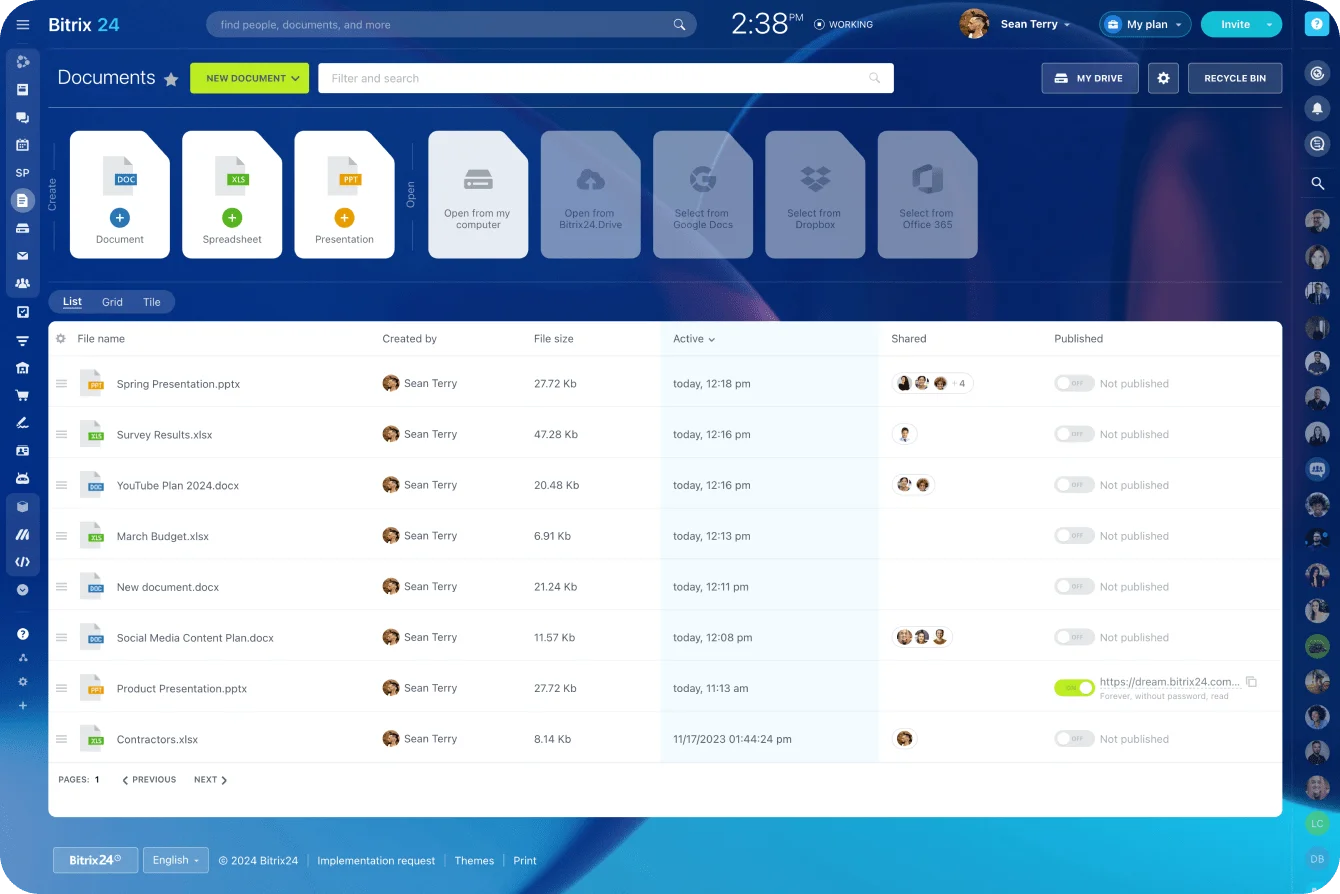
Store supporting files in a shared document management system so delivery isn't hunting through email attachments for the latest version.
5. Internal transition review
Standard implementations with fixed scope may only need the project owner to review the package asynchronously. Complex engagements get a live review.
Make a live transition mandatory when the deal includes:
- Custom scope
- Several workstreams
- Executive stakeholders
- Aggressive deadlines
- Unusual commercial terms
- External integrations
- Major client dependencies
- Unresolved questions
6. Delivery acceptance
Acceptance is the control point that transfers ownership. The project owner reviews the package and does one of three things:
- Accepts it, and delivery planning begins.
- Rejects it, sending the package back to the relevant owner with a specific reason.
- Accepts with conditions, leaving clearly identified issues open with owners and deadlines attached.
Say delivery finds a critical client dependency with no owner. The handoff doesn't vanish into another round of meetings. The record goes back to the person responsible for resolving that issue.
|
Stage |
Trigger |
Required artifacts |
Approval gate |
Exit criteria |
Return condition / feedback loop |
Escalation point |
|---|---|---|---|---|---|---|
|
Pre-close capture |
Late-stage opportunity |
Goals, scope draft, stakeholders, dependencies |
Sales completeness check |
Mandatory fields are complete enough for feasibility review |
Missing or vague fields return to the opportunity owner |
Repeatedly missing mandatory fields |
|
Scope validation |
Custom or implementation-bearing deal |
Solution notes, assumptions, exclusions, risks |
Delivery or pre-sales review |
Feasibility, assumptions, dependencies, and exclusions are confirmed |
Unsupported requirements return to sales for revision, removal, or further approval |
Non-standard asks or capacity concerns |
|
Commercial approval |
Final quote or contract package |
Pricing, terms, discount rationale, exceptions |
Finance/legal approval |
Required commercial and legal exceptions are approved |
Unapproved terms return to the commercial owner for revision |
Margin or term exceptions |
|
Handoff packaging |
Ready-to-close after required approvals |
Operating brief and linked source documents |
Sales submission check |
Package is complete, source documents are linked, and the deal is ready for internal review |
Incomplete or conflicting records return to sales or the relevant approval owner |
Incomplete package |
|
Internal transition review |
Package submitted |
Review notes and unresolved issues |
Risk-based review completion |
Delivery has either cleared the package or recorded specific conditions/rejection reasons |
Disputed scope or missing information returns to the owner responsible for resolving it |
Scope dispute |
|
Delivery acceptance |
Review complete and deal closed-won |
Accepted handoff record |
Project owner acceptance |
Delivery explicitly accepts the package, with any conditions assigned to named owners and dates |
Rejected handoff returns through its coded rejection path until the issue is resolved |
Rejected handoff |
Pro Tip: Define rejection reasons in advance. A short list like "missing dependency," "unapproved custom scope," "timeline conflict," and "contract ambiguity" makes rejected handoffs easier to route and report on.
Roles, ownership, and handoffs: Who owns what before and after close
A handoff only works when each part of the deal has a clear owner.
Before acceptance
Before acceptance, ownership splits like this:
- Sales owns deal context, client expectations, and the accuracy of documented promises.
- Pre-sales or solutions owns technical feasibility, assumptions, and implementation requirements.
- Finance owns pricing, discount, and margin approval.
- Legal owns contract language and legal exceptions.
- Revenue or sales operations owns workflow rules, required fields, routing, and reporting.
- Customer success owns relationship continuity when it starts before implementation.
Contract signature doesn't remove sales from the process. Sales stays accountable for the accuracy of what was represented until the project owner accepts the package.
After acceptance
Once the handoff is accepted:
- The project owner owns execution planning.
- Delivery owns operational updates.
- Customer success manages adoption and relationship continuity where relevant.
- The approved scope stays the reference point for later changes.
Tools for project management then turn the accepted handoff into tasks, milestones, owners, and deadlines without making the project team rebuild the original deal context.
What happens when delivery rejects the handoff?
There has to be a defined return path. A rejected package goes back with a specific reason:
- Missing dependency owner
- Unapproved custom deliverable
- Unclear timeline commitment
- Conflicting contract language
- Missing client decision-maker
- Unsupported technical requirement
Here's the common one. Sales discussed a custom API connection during negotiations, the client now believes it's part of the implementation, but the requirement never got technical approval or made it into the final scope. The project owner rejects the handoff under the relevant reason instead of quietly absorbing the work. The request goes back to solutions or deal desk. If the API work is feasible, it gets formally approved and documented. If it changes cost, timing, or scope, the commercial record gets updated. If the company won't provide it, sales resets the expectation with the client before kickoff.
Undocumented commitments need an escalation owner too, usually deal desk, delivery leadership, or revenue operations. They don't become project scope because someone remembers them being mentioned on a sales call.
Documentation, approvals, and shared visibility: The control system behind a reliable handoff
Good handoff documentation is easy to verify.
Write commitments as operational records
Skip the long narrative summary when a structured field does the job better. For example:
- Deliverable: Migration of agreed standard workflows
- Exclusion: Custom API integration
- Dependency: Client provides source data
- Owner: Client operations lead
- Timing condition: Data supplied by the agreed deadline
- Open issue: Final access permissions awaiting security approval
This format lets the project owner check the conditions in seconds and gives everyone the same wording to point back to.
Start with a minimum operating brief
Building the handoff template from scratch? Make these fields mandatory:
- Business goal and expected outcome
- Approved deliverables
- Explicit exclusions
- Target dates and timing conditions
- Client and internal stakeholders
- Dependencies and named owners
- Assumptions used during scoping
- Custom requests or approved exceptions
- Open questions, risks, and outstanding decisions
- Governing proposal, contract, approval status, and supporting document links
The template expands for larger implementations, but these fields give the project owner enough to determine what was sold, what's unresolved, and what has to happen before work starts.
Match approvals to the risk
Different risks go to different decision-makers. Commercial teams approve pricing and contract exposure. Delivery leaders approve feasibility and capacity. Technical teams approve architecture or integration requirements. Executives step in for exceptions that create unusual financial or delivery exposure.
One approval doesn't silently stand in for all the others.
Keep supporting systems connected
The CRM, proposal, contract, handoff record, and project workspace should all reference the same underlying deal. With Bitrix24 tasks and projects, for example, teams create post-sale work around named owners, deadlines, and dependencies while keeping those activities tied to the broader customer record.
The accepted scope stays traceable from the sales record into the delivery plan, whatever tools you use. Open issues get the same treatment. A pending client dependency doesn't disappear because the deal changed stage.
Common failure points in sales-to-delivery transition systems
Most handoff problems come from predictable shortcuts.
1. Treating verbal context as documentation
Call recordings and meeting transcripts are useful reference material and poor substitutes for structured scope. A project owner shouldn't have to replay a 40-minute sales call to figure out whether an integration was included.
2. Skipping delivery review because the deal is urgent
Fast-moving opportunities push teams to bypass controls. The payoff is speed now. The bill arrives later, when delivery discovers an unsupported requirement, replans the project, or chases an exception after the client already thinks the commitment is firm. A predefined fast-track for low-risk deals keeps the essential checks in place without adding delay.
3. Starting work before acceptance
Once delivery starts working, the company signals the project is ready. That makes unresolved scope harder to challenge later. A request that could have been clarified before kickoff starts looking like an agreed commitment once people have already put hours into it.
4. Copying the deal into several disconnected tools
Manual re-entry breeds version problems. Sales updates the CRM while delivery works from an older project brief. Legal amends contract language the project team never sees. A salesperson sends a revised proposal that never reaches the implementation workspace.
Where you can, use Bitrix24 integrations or automated data transfer to cut the repeated copying between systems.
5. Ignoring early client warning signs
Certain phrases should trigger a review:
- "We thought that was included."
- "That's different from what sales told us."
- "We expected that in phase one."
- "Why are we being asked for this now?"
- "We already discussed this."
Repeated clarification loops, early change requests, and disagreements during kickoff usually mean the transition process needs attention upstream.

How to scale the handoff without slowing revenue: Reliability, automation, and optimization
The process gets stricter as delivery risk climbs. Apply the same review burden to every deal and you waste time on routine work while still under-reviewing the complex ones.
Standardize the common path
Start with a shared template that carries:
- Required fields
- Approval rules
- Risk flags
- Acceptance criteria
- Rejection reasons
- Escalation owners
A fixed-scope onboarding package moves through a light process. A multi-phase implementation automatically draws more scrutiny.
Route based on risk
Useful routing criteria:
- Product or service type
- Custom scope
- Implementation complexity
- Contract exceptions
- Integration requirements
- Number of workstreams
- Client dependencies
- Timeline compression
This keeps review effort where a bad assumption would do the most damage.
Automate control points while keeping judgment human
Automation handles predictable workflow actions well. Ready-to-close status can trigger a handoff checklist, assign a project owner, create review tasks, or flag operations that an approval is still missing. Closed-won then unlocks final delivery acceptance once those checks clear.
Bitrix24 task automation supports this kind of routing by moving routine follow-up out of individual inboxes and into a visible workflow.
Keep human review where interpretation matters. A workflow confirms a feasibility field is filled in. A person still decides whether an unusual implementation promise is realistic.
Pro Tip: Start by automating reminders for missing inputs. Auto-pushing incomplete deals into the next stage just relocates the problem downstream.
Measure where the handoff fails
You don't need dozens of metrics. Track a small set that ties directly to execution quality:
- Time from closed-won to delivery acceptance
- Percentage of handoffs rejected
- Most common rejection reasons
- Kickoff delays caused by missing information
- Scope clarifications raised after close
- Change requests linked to pre-sale gaps
Bitrix24 CRM analytics and reporting helps operations teams spot patterns across deals instead of investigating each breakdown one at a time.
A monthly review is a practical starting point. Look at delayed or rejected handoffs, find where information got lost, then fix the field, approval rule, template, or training tied to that failure.
FAQs
What if the client signs before delivery reviews the scope?
Allow it only when the deal falls within clearly defined standard scope or follows an approved exception process. Custom implementation work, unusual integrations, and aggressive timelines get feasibility review before they become external commitments.
What if the salesperson promised something that isn't written in the contract?
Route the commitment through a defined dispute process. The right owner decides whether to honor the request commercially, add it through a formal scope change, or reset expectations with the client. Delivery doesn't make that call informally during kickoff.
How should urgent deals be handled without bypassing controls?
Build a fast-track path for predefined low-risk deals. Keep the minimum controls: mandatory fields, documented exclusions, approval of unusual terms, and delivery acceptance.
Who maintains the handoff record after close?
Once accepted, the project owner owns execution updates. Lock or version-control the original committed scope so later project changes don't overwrite the record of what was sold.
Where should the source of truth live if CRM and project tools conflict?
Choose one governing handoff record and make the supporting systems point back to it. The accepted handoff package defines the approved transition state. Proposal, contract, CRM, and project records support that record instead of competing with it.
When should customer success enter the workflow?
Bring customer success in before or during the transition review when they'll own adoption, relationship continuity, renewals, or early value realization. They get the same approved context rather than building a separate account interpretation after implementation starts.
How detailed should handoff documentation be for small deals?
Detailed enough that a competent new owner could start planning without asking the seller to repeat the deal. Smaller engagements use shorter templates, but the core information still has to be explicit.
When is a live transition meeting mandatory?
Use a live review for deals involving:
- Custom scope
- Multiple workstreams
- Executive stakeholders
- Unusual commercial terms
- Aggressive timelines
- Technical complexity
- Major client dependencies
- Unresolved questions
Standard, repeatable deals move through asynchronous review and acceptance.
How do you adapt the process for custom, multi-stakeholder, or multi-phase implementations?
Expand the handoff package by workstream or phase. Document which commitments apply to each stage, name the owner of every major dependency, and show which conditions have to be met before the next phase begins. Broader delivery, technical, commercial, or customer success review may also be required before acceptance. For complex engagements, that accepted record gives each team a clean starting point and makes later scope changes easier to identify, approve, and communicate.
Keep sales promises intact through delivery
Bitrix24 connects CRM, approvals, documents, tasks, and reporting so every handoff moves with clear scope, owners, and risks.
Get Started NowTurn the handoff into a working process
Skip the handoff and the step doesn't disappear. It moves downstream and resurfaces as a delayed kickoff, an argument over what was sold, or a client who trusts you a little less than they did on signing day.
The rules just have to be specific enough that nobody rebuilds them deal by deal: one standard template, mandatory fields, exceptions routed to whoever can approve them, and a clear definition of what acceptance and rejection mean before the first handoff lands. You can run all of it by hand. It holds together better when CRM records, documents, approvals, tasks, owners, and reporting stay connected, which is what Bitrix24 gives sales and delivery: one place to build the process instead of stitching it across spreadsheets, inboxes, and disconnected project files.
Build the transfer once, and the promise reaches delivery intact.
That's the whole game: the client never sees the seams, because there aren't any. Sign up for Bitrix24 for free and build your first handoff workflow today.