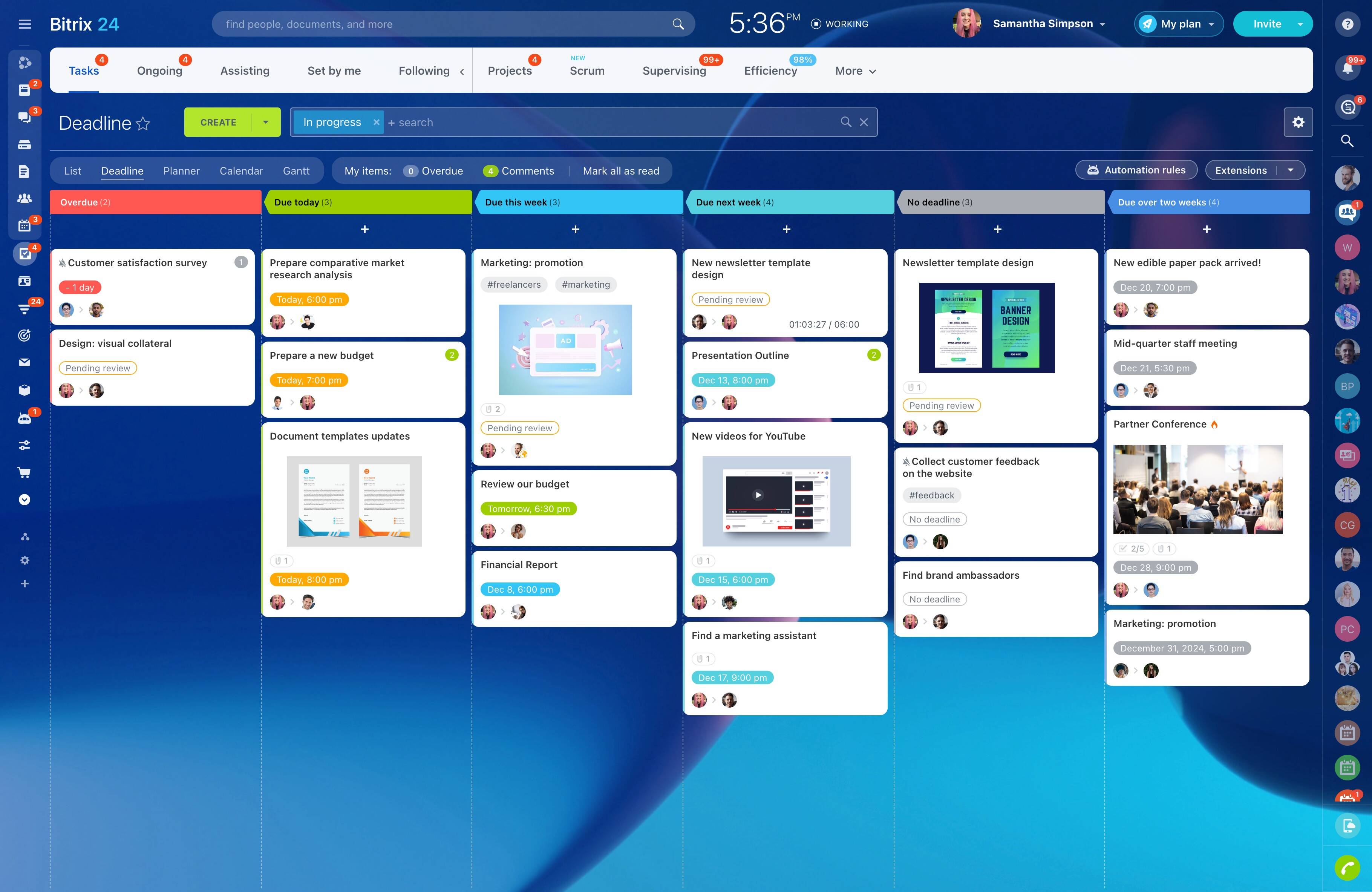
Project lifecycle management helps a team move a defined piece of work from an initial idea to an accepted result. Each stage answers a different question: what should be delivered, how will the work be organized, who owns each activity, and when is the project ready to close?
Bitrix24 can support this sequence with a shared workspace for project tasks, discussions, responsibilities, and status updates. The team can keep the working plan connected to the conversations and actions that move the project forward, whether the process is sequential or revisited as requirements change.
Adapt the lifecycle to the work
Some projects progress through fixed stages, while others return to planning as requirements develop. Either approach works better when the current stage, next action, and responsible person are visible.
Bitrix24 provides an online workspace where teams can organize their chosen stages, responsibilities, communication, and review points around the project cycle.
Review progress against the plan
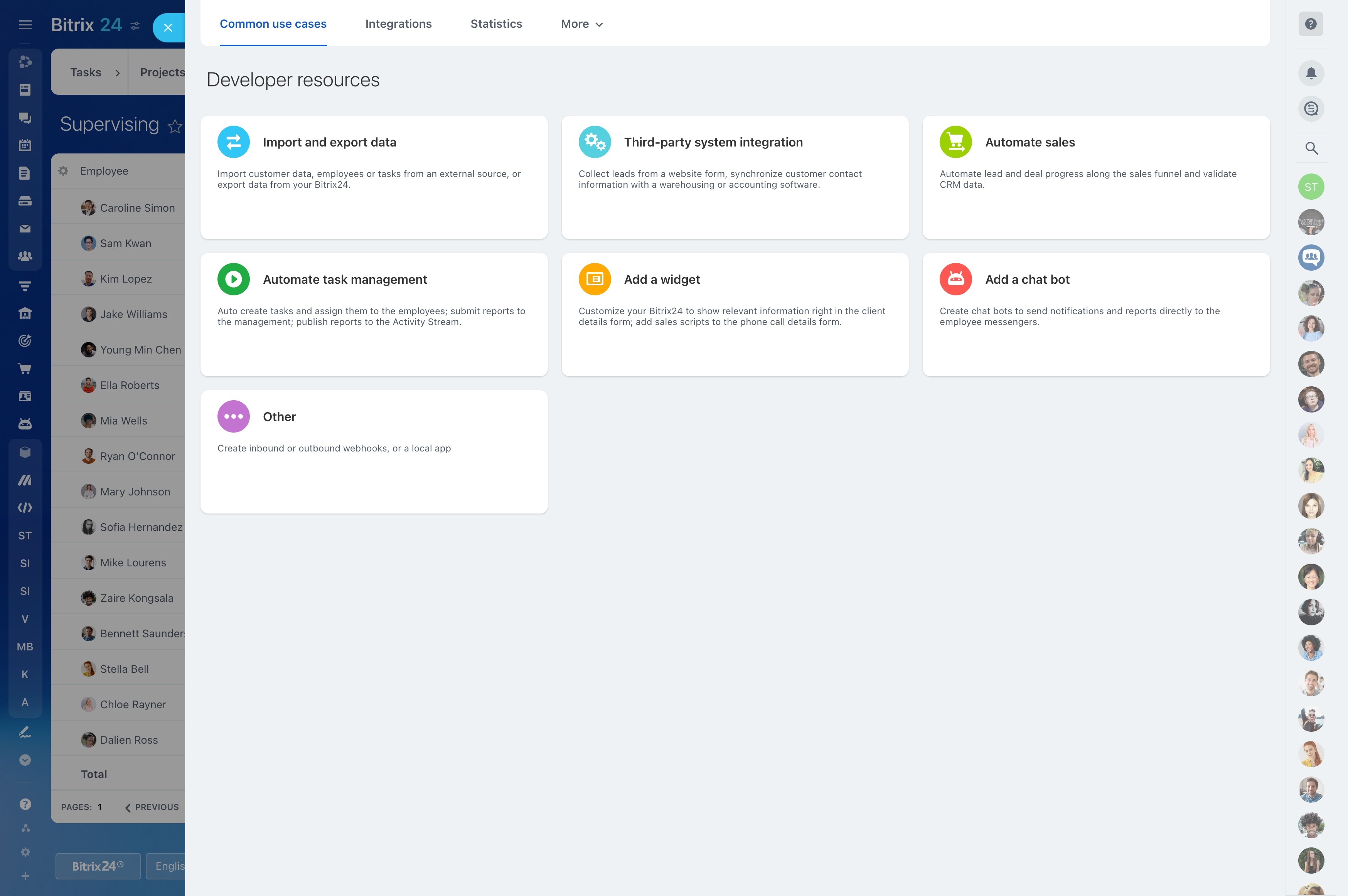
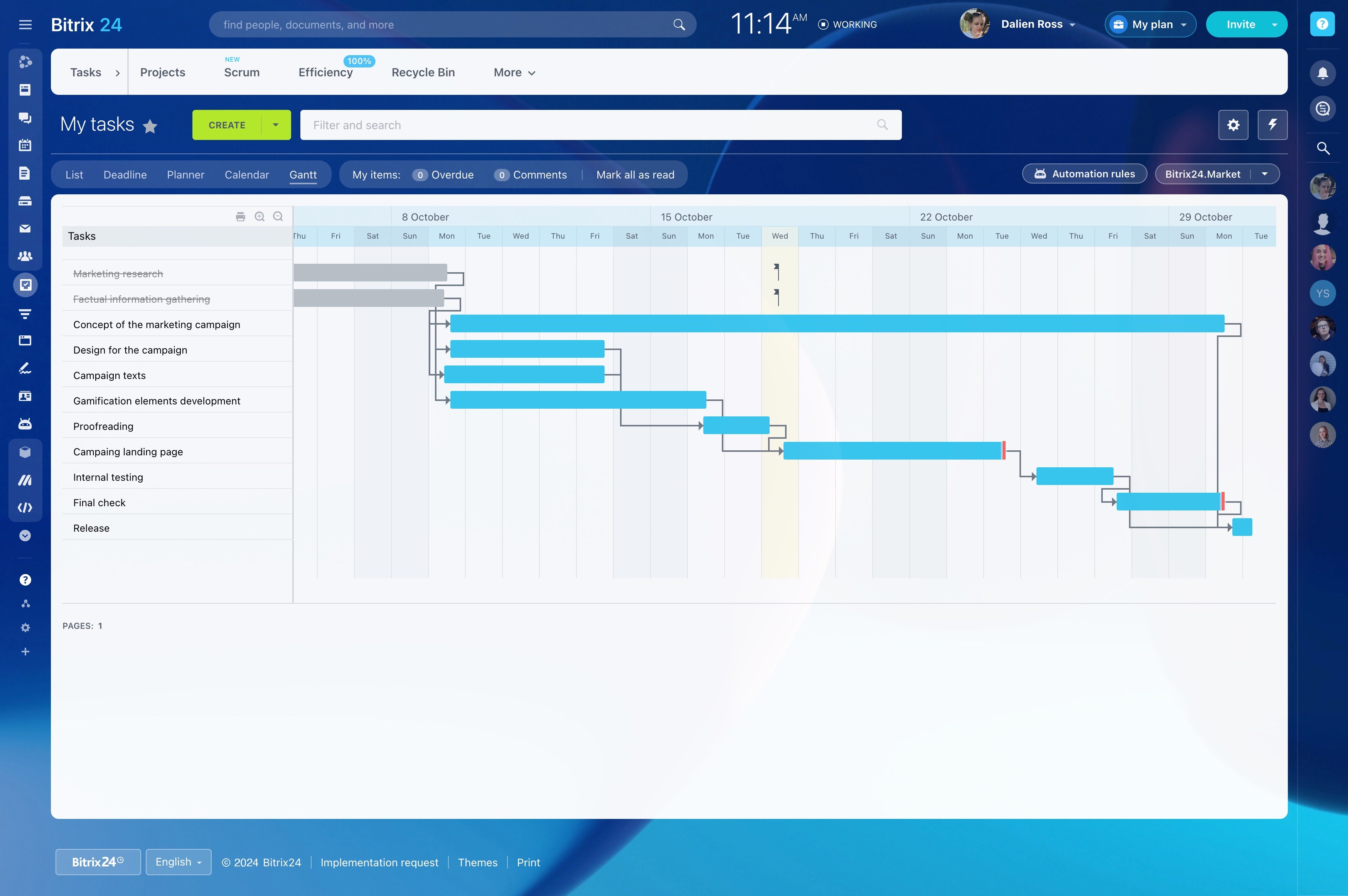
Monitoring means checking more than the final deadline. Review task status, timing, ownership, and dependencies to see whether the project is moving as expected or needs attention.
Regular progress reviews help the team address delayed activities and adjust remaining work before a small change affects the intended result.
Define the project before planning
Initiation turns a proposed idea into a project with a clear purpose. State the intended result, the reason it matters, the main constraints, and the people who need to contribute before assigning detailed work.
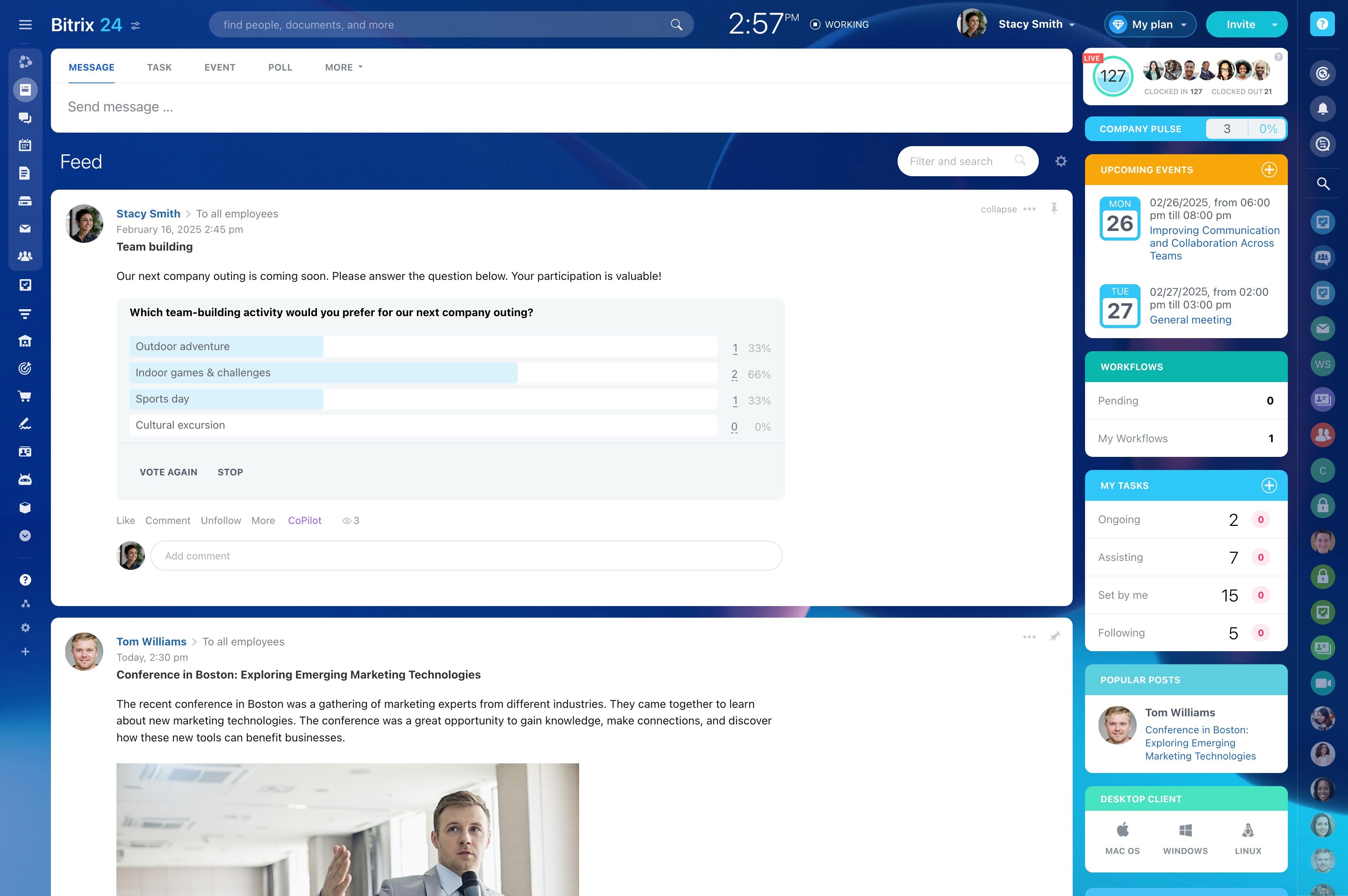
Capture the initial decision and supporting discussion with the project work so the team has a shared reference when planning begins.
Build a workable project plan
Planning converts the objective into deliverables, activities, deadlines, and ownership. Break the work into tasks, identify dependencies, and make the required sequence visible.
- Define stages and expected deliverables.
- Assign an owner to each task.
- Set deadlines and note dependencies.
- Keep essential project details with the related work.
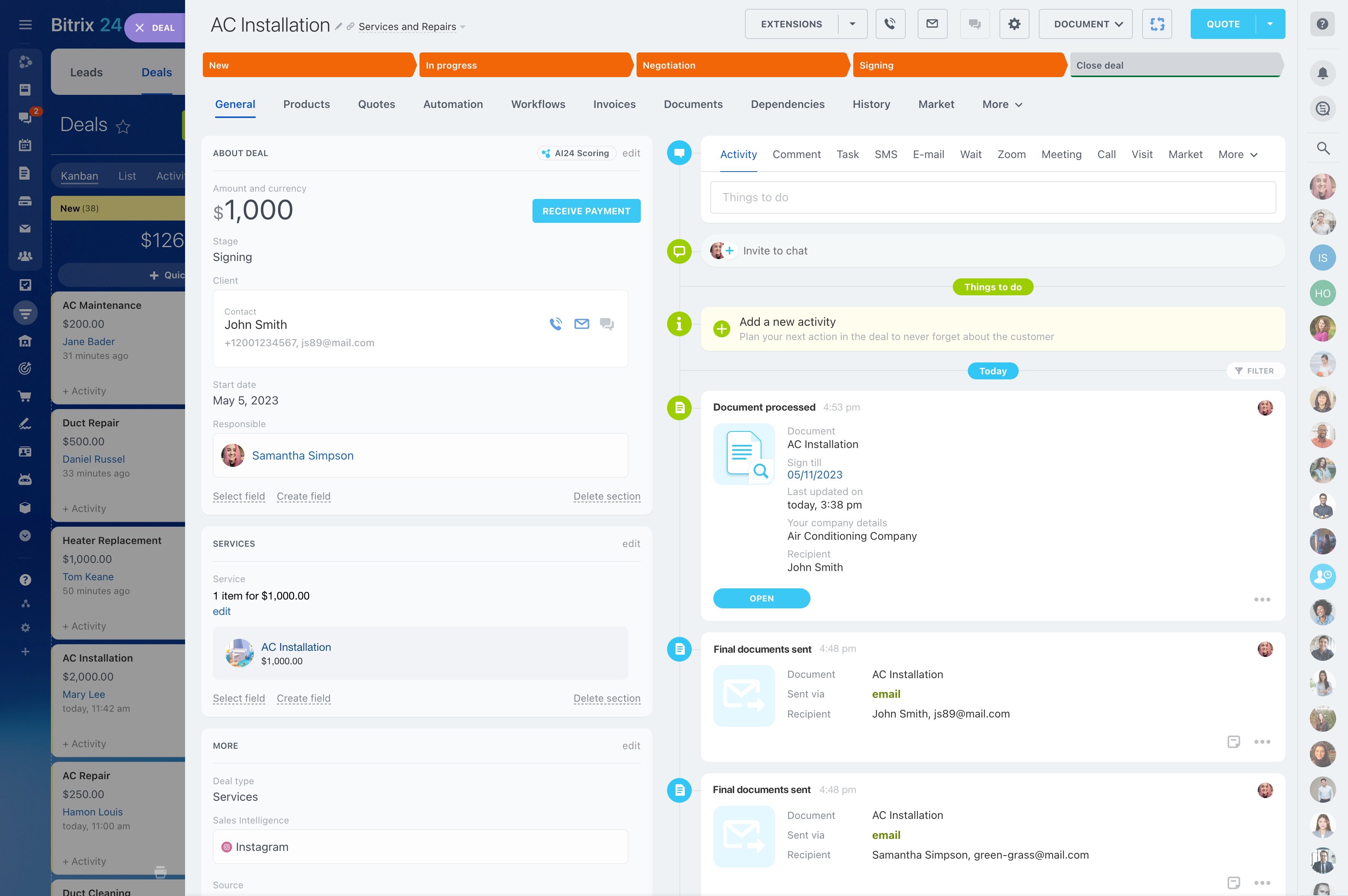
Execute through clear ownership
Execution is where planned activities become completed work. Each participant should be able to see their responsibilities, required handoffs, open questions, and decisions that could affect the schedule.
A shared project workspace keeps assigned tasks and related updates together, giving the team a practical place to coordinate work as it happens.

Record and assess project changes
Requirements, deadlines, and available contributors can change during execution. Record the change, consider its effect on related tasks, and revise ownership or timing deliberately rather than allowing the original plan to become misleading.
Keeping the decision beside the affected work gives participants a reliable reference for the next action.

Close the project with a review
Closure confirms that the planned work is complete and the intended result has been accepted. Check outstanding tasks, collect final materials, confirm handover, and record lessons that may help with similar projects.
A defined closing stage separates completed work from active projects and gives the team a clear point for reviewing what to repeat or improve.